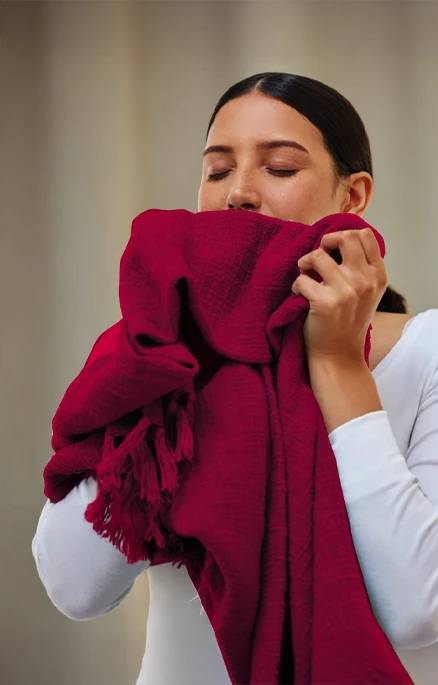
You just pulled a box from the basement or attic, and something smells wrong before you see the spots. Do not throw the clothing away yet; mildewed garments are often salvageable, and dry cleaning can often reach what a home wash can't. Surface growth that has not altered the fabric is usually removable. Mildew staining may improve, although the odds fall the longer it sits.
But once mildew digests cellulose, the substance forming plant-based fibers, the cloth itself becomes weak, and cleaning cannot restore it. Most mildewed clothing sorts into one of three categories, and once you know which category you're holding, the decision practically makes itself.
Before you treat anything, confirm you're actually looking at mildew. A box that's sat for years usually holds more than one kind of mark, and treating the wrong category either wastes your afternoon or damages a garment that didn't need help in the first place.
Here's what you're looking at:
Still not sure? Trust your nose over your eyes. Mildew carries a musty smell that yellowing and dust simply don't produce, and that smell holds even when the visible marks fade or blend into a busy print. If you catch that musty smell, you have mildew, no matter what the fabric looks like.
This part matters more than people expect, and the order in which you do it decides if the mildew lifts off or gets pushed deeper into the weave.
Carry the garment outdoors or into a well-ventilated room, never a closed bathroom over a laundry basket. Disturbing mildew releases spores into the air, and a small room isn't where you want to be breathing them.
Don't touch it with a brush while it's still damp. Damp mildew grinds into the fibers instead of lifting off, and a surface problem becomes a staining problem in about thirty seconds of brushing. A few hours in indirect sunlight usually finishes the drying and cuts down the smell, too.
Use a soft-bristle brush and short strokes, working away from your body, over a sheet or out on the grass so the debris doesn't end up back in your house. Skip the scrubbing. Light, repeated strokes lift surface growth without driving it deeper.
Cotton and linen take more punishment than almost anything else in your closet, so if that's what you're holding, you have real options. Once you brush off the loose growth, here's how to remove mildew from clothes made of these fibers:
Skip the chlorine bleach. It's already off-limits on anything colored, and even on whites, go easy with it here specifically. Mildew has already started weakening the cellulose in the fiber, and bleach on top of that can finish what the mold started.
Put away the soak method if you're holding wool, silk, or leather. These fibers play by different rules, and treating them like cotton usually costs you the garment.
Wool felts when you agitate it in water. Silk water-marks and loses its finish. Leather can stiffen or discolor for good once it's dried the wrong way. Mildew treats these materials differently, too, feeding on finishes and natural oils rather than digesting cellulose, which is part of why a home fix here is riskier, not safer.
Your best move: Brush lightly, let the item air out, and hand it to a professional instead of experimenting at your sink. A failed attempt on silk or leather usually leaves the garment worse than the mildew on its own, and unlike cotton, you rarely get a second try.
One mildewed garment tells you something about the whole container, not just that single item. Whatever conditions caused this touched everything else stored alongside it, whether or not mold shows on those pieces yet.
That last step is the one people skip, and it's why mildew shows up again in the same closet a year or two later.
A washable cotton garment with a small surface spot may still be manageable at home. However, wool, silk, leather, structured clothing, level-two staining, or anything that remains musty after washing should not go through another improvised treatment. Repeated soaking can distort the garment, weaken certain fibers, or spread discoloration without removing what caused the problem.
If the fabric is still damp, mildew can continue developing while the garment sits. Brian's One Day Cleaners inspects the material and the extent of the damage first, then selects a cleaning method suited to that specific fiber. That gives a salvageable garment a better chance without pretending every severely damaged item can be restored.
You can schedule a complimentary pickup today if the item is silk, wool, leather, visibly stained, or still musty after washing. Pickup and Delivery Service is FREE throughout the service area, so you can get the garment assessed promptly without making another trip.
Baldwinsville: 3 Mechanic St, Baldwinsville, NY 13027
Manlius: 315 Fayette St, Manlius, NY 13104
Syracuse: 2201 W Genesee St, Syracuse, NY 13219
Phone: +1 (315) 633-4024
Email: kat@briansonedaycleaners.com